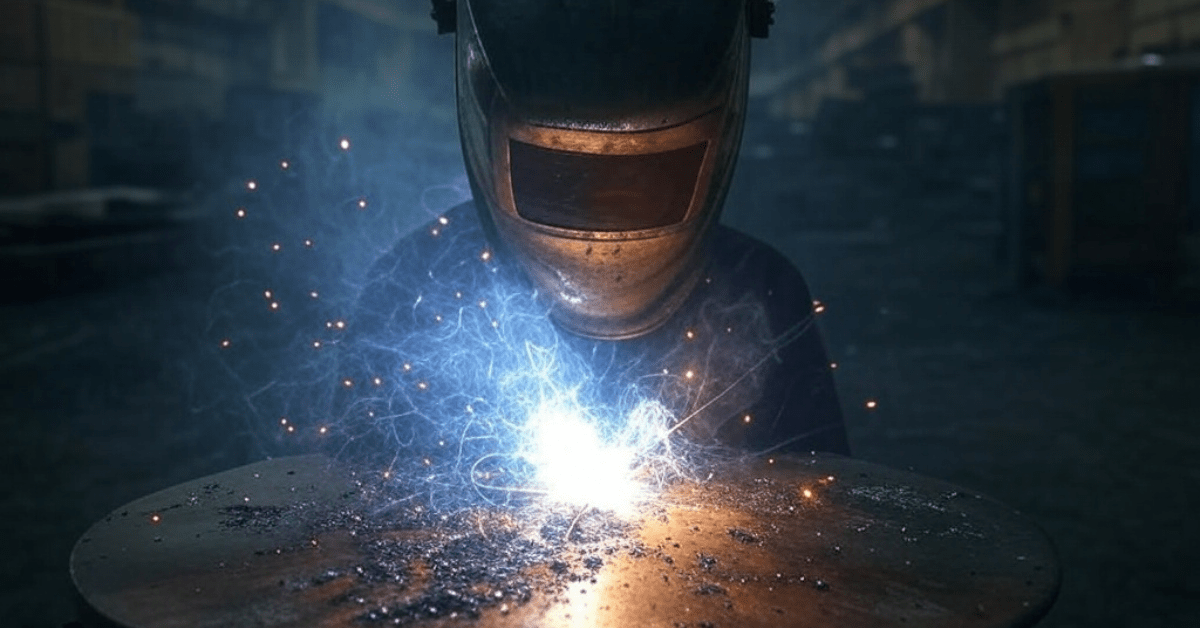
Submerged arc welding (SAW) achieves high-deposition, high-quality welds by feeding consumable electrode wire under granular flux that covers the weld area. The arc burns beneath the flux blanket, producing deep penetration and excellent mechanical properties.
SAW process advantages include exceptional deposition rates often 5-10 times manual welding, deep weld penetration enabling single-pass welding of thick sections, high-quality welds with excellent mechanical properties, minimal weld spatter and fumes improving cleanliness and safety, and suitability for automation improving consistency.
Applications in pressure vessel and structural fabrication include longitudinal seam welds in cylindrical shells, circumferential girth weams joining shell sections, thick-plate butt joints in structural members, surfacing and cladding for wear or corrosion resistance, and any high-quality production welding in flat or horizontal positions.
SAW equipment ranges from simple tractor-mounted systems for straight seams to sophisticated automated systems with rotating positioners, seam tracking, and multi-wire configurations. Automation enables consistent quality and maximum productivity benefits.
Process limitations include position restrictions to flat and horizontal, equipment and mechanization requirements, relatively slow travel speeds, and flux handling needs. Despite limitations, SAW productivity makes it essential for production welding of pressure vessels, pipe, and structural components.
In the world of industrial fabrication, achieving strong, consistent, and high-quality welds is essential for building durable structures and equipment. One welding method that has become a staple in heavy-duty…