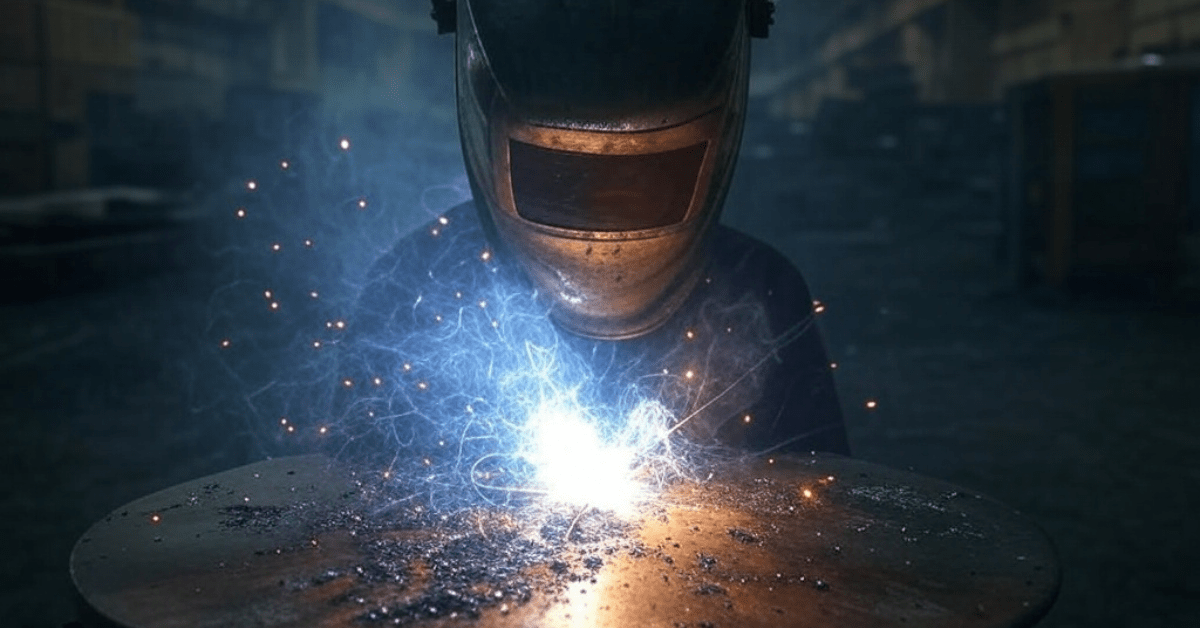
Industrial welding joins metal components to fabricate equipment, structures, and piping for manufacturing, processing, energy, and infrastructure applications. Welding quality directly impacts equipment integrity, safety, and reliability, making qualified welding procedures and skilled welders essential.
Welding processes used in industrial fabrication include SMAW (stick welding) for versatility and field use, GMAW (MIG) for productivity on thinner materials, GTAW (TIG) for quality root passes and exotic materials, FCAW for high deposition rates, and SAW for thick-section welding. Process selection depends on material, thickness, position, and quality requirements.
Industrial welding requires procedure qualification per code requirements, welder qualification and certification, proper joint preparation and fit-up, weld parameters within qualified ranges, appropriate filler materials, and inspection to verify acceptability. For ASME code work, documented procedures and qualified welders are mandatory.
Weld quality impacts equipment performance and cost. Defects require repair, consuming time and resources. Good welding practices—proper procedures, skilled welders, quality materials, appropriate equipment—prevent problems. Investment in welding capability delivers returns through productivity and quality.
In the world of industrial fabrication, achieving strong, consistent, and high-quality welds is essential for building durable structures and equipment. One welding method that has become a staple in heavy-duty…