
Welding techniques are the specific methods, skills, and practices welders apply producing quality welds across materials, processes, and positions. Technique fundamentals include proper electrode or torch angle, travel speed, arc length, manipulation patterns, and starts/stops. Each welding process requires specific techniques—SMAW electrode manipulation and slag control, GMAW gun angle and wire feed coordination, GTAW torch control with filler rod addition, and appropriate variations for different positions (flat, horizontal, vertical, overhead).

Advanced techniques extend capabilities including root pass methods ensuring penetration, hot pass cleaning, multipass sequencing for thick materials, weaving patterns for specific joints, temper bead techniques for heat-sensitive materials, and specialized approaches for exotic metals and dissimilar materials. Technique development requires understanding fundamentals, proper training, practice on representative mockups, inspection feedback, and continuous skill development. Quality techniques prevent defects through proper joint preparation, good fit-up, parameter control, cleanliness, and attention to inspector requirements.

A Guide to MIG vs TIG Welding in Fabrication for Houston’s Energy Industries
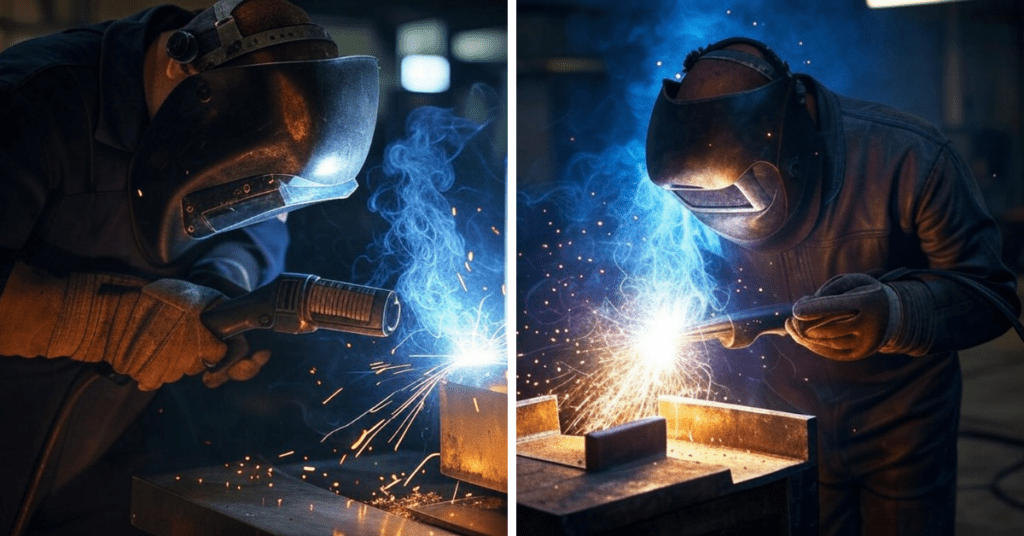
Welding is the foundation of industrial fabrication, joining metals to build robust equipment and infrastructure for North America's energy-driven economy. At Wikota Fab Shop, we specialize in MIG (GMAW) welding…

Continue ReadingA Guide to MIG vs TIG Welding in Fabrication for Houston’s Energy Industries