Table of Contents
Single-Point Accountability: Why One EPC Contractor Beats a Fragmented Vendor Chain
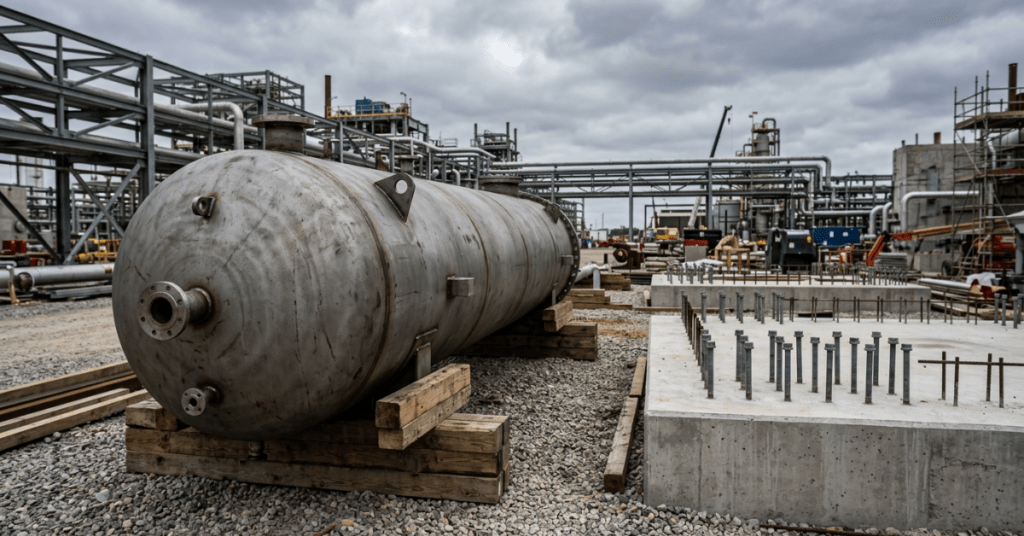
A pressure vessel arrives from the fabricator two inches out of tolerance for the foundation the construction crew already poured. The engineering firm says the drawing was correct. The fabricator says they built to spec. The construction contractor says they built to the drawings they were given. Three invoices, three sets of lawyers, and nobody actually responsible for fixing it. This is the failure mode of a fragmented project delivery model, and it is the single most common reason industrial owners eventually move to an integrated EPC contractor.
What Single-Point Accountability Actually Means
Single-point accountability means one contractor holds responsibility for engineering, procurement, and construction under one contract, with one team managing the handoffs between those phases internally instead of across separate companies. When a design question comes up during construction, it gets resolved by the same organization that wrote the design — not routed through change-order paperwork between three unrelated firms.
At Wikota Design & Construction and Fabrication, that means the same project management structure that scopes a project during consultation and planning carries it through engineering and procurement, into fabrication, and out to the field for construction and commissioning. The people who understand why a design decision was made are the same people executing it.
Where Fragmented Delivery Breaks Down
Traditional multi-contract delivery — design-bid-build, or separately sourced engineering, fabrication, and construction — creates natural seams where responsibility can slip through. A few of the most common:
- Design-to-fabrication handoff: An engineering firm with no fabrication background specifies a weld procedure or tolerance that is technically correct on paper but expensive or impractical to execute in the shop.
- Fabrication-to-field handoff: A fabricator delivers to spec, but nobody on that team has visibility into site conditions, so field-fit issues surface only after equipment arrives.
- Procurement timing gaps: Long-lead materials get ordered against an engineering schedule that construction wasn’t consulted on, creating either costly expediting fees or idle field crews.
- Change management disputes: When something needs to change mid-project, each contractor has an incentive to prove the change originated with someone else’s scope.
None of these problems are caused by any one company doing bad work. They are caused by the seams between companies — the points where information, context, and incentive stop transferring cleanly.
How an Integrated EPC Model Closes the Gaps
One Project Management Structure, Start to Finish
Wikota’s project managers are involved from initial consultation through commissioning and closeout, not handed a project midstream. That continuity means design intent doesn’t get lost in translation between phases — the person answering a field question during construction was in the room when the original engineering decision was made.
In-House Fabrication Tied Directly to Engineering
Because fabrication happens at Wikota’s own facility at 3044 Venergy Drive in Brookshire, Texas, engineering and fabrication are not separate businesses coordinating by email. Design decisions get sanity-checked against real shop constraints before they’re finalized, which reduces the redesign cycles that happen when an outside fabricator flags a buildability problem after drawings are already released.
Certified Work, Traceable to One Team
Wikota’s welding is performed to AWS D1.1 structural welding standards, with inspection overseen by CWI-certified personnel and material integrity reviewed by NACE- and NDT-certified staff. When quality documentation is generated by the same organization managing engineering and construction, there’s no ambiguity about whose standards were applied or who stands behind the result.
Single-point accountability starts before a single drawing is issued. Wikota’s consultation and planning process is built around understanding a project’s technical and operational requirements up front, so procurement, fabrication, and construction are working from a shared, agreed-upon scope rather than reconciling assumptions later.
Discuss Your Project
Talk to Wikota about bringing engineering, procurement, and construction under one accountable team.
Start the ConversationWhat This Means for Project Owners
The practical benefit of single-point accountability isn’t abstract — it shows up as fewer change-order disputes, faster resolution when something does need to change, and a shorter list of vendors to manage. For an operator running a facility expansion or new build across the Gulf Coast, Permian Basin, or Mid-Continent, that translates directly into schedule and budget predictability, because there’s one team responsible for the outcome rather than three teams each responsible for their own piece of it.
Frequently Asked Questions — Single-Point Accountability
Does single-point accountability cost more than hiring separate contractors?
Not typically. While a single EPC contract may look larger up front than any one individual bid, it usually reduces total project cost by eliminating the redesign cycles, expediting fees, and change-order disputes that fragmented delivery tends to generate.
Can Wikota still work alongside an owner's existing engineering firm?
Yes. Wikota can integrate with an owner's existing design team for procurement, fabrication, and construction phases, though the full accountability benefit is greatest when engineering is included under the same contract.
What industries benefit most from single-point EPC delivery?
Owners in oil and gas, midstream, RNG, petrochemical, power generation, and helium production tend to see the most benefit, since these projects typically involve tight tolerances, code-driven fabrication, and schedules where a delay in one phase directly delays startup.
Discuss Your Project
Talk to Wikota about bringing engineering, procurement, and construction under one accountable team.
Start The ConversationWikota Design & Construction and Fabrication proudly serves oil and gas, midstream, RNG, petrochemical, power generation, and helium clients across all 48 States.