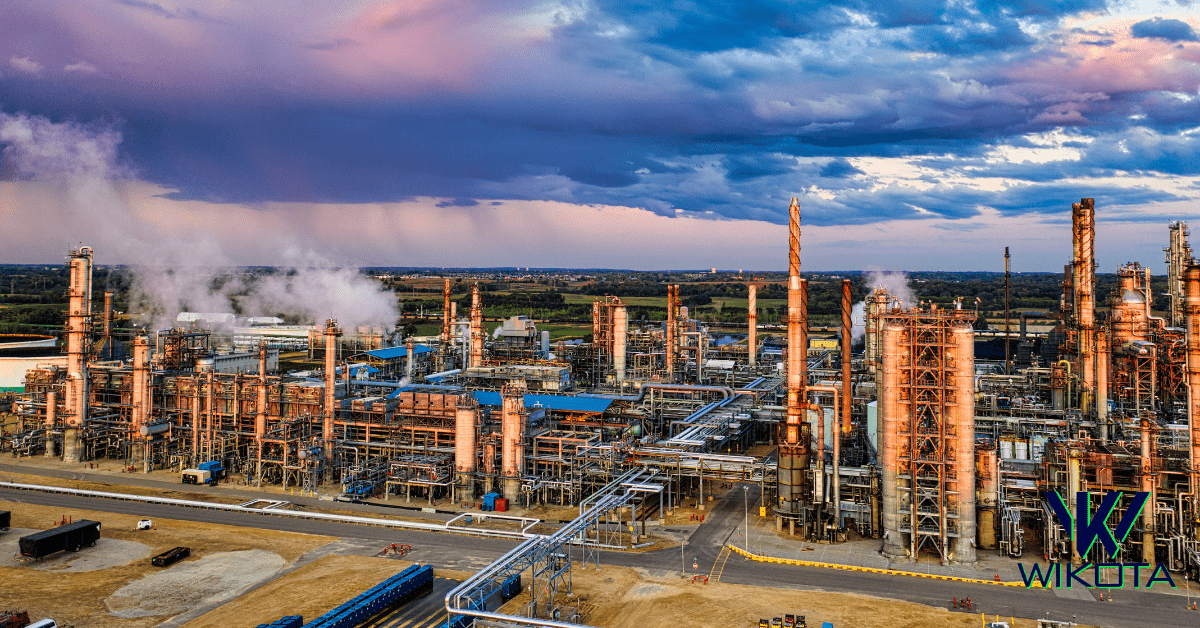
LNG (liquefied natural gas) facilities liquefy natural gas for storage and transportation or regasify LNG for pipeline injection and end-use. These complex installations include liquefaction trains, cryogenic storage tanks, loading/unloading systems, and supporting utilities—all requiring specialized equipment operating at extreme low temperatures.
Liquefaction facilities process natural gas through pre-treatment, refrigeration to -162°C (-260°F), storage in insulated tanks, and loading to LNG carriers. Regasification facilities receive LNG, store it cryogenically, vaporize for pipeline injection, and control gas quality and pressure. Small-scale LNG facilities serve local markets, industrial users, or vehicle fueling.
Equipment for LNG facilities includes cryogenic heat exchangers, cold boxes housing low-temperature equipment, insulated storage tanks, vaporizers and boil-off gas systems, and cryogenic piping. All equipment must maintain integrity at extreme temperatures, requiring special materials—stainless steels, aluminum alloys, 9% nickel steel—and fabrication techniques.
LNG market growth drives facility development globally. Export terminals enable gas monetization from stranded reserves. Import terminals provide energy security and supply flexibility. Peak-shaving facilities support pipeline grid reliability. Each requires specialized fabrication expertise.
In the fast-paced world of energy infrastructure, where every pipeline, compression station, and renewable natural gas (RNG) facility demands flawless execution, detailed design engineering stands as the cornerstone of success.…